Features
No makeup looks: how to read the photo before buying
No makeup looks are a styled photograph, not a bare face. Learn the cues that fake candor, what phone cameras do, and how to buy without trusting a picture.
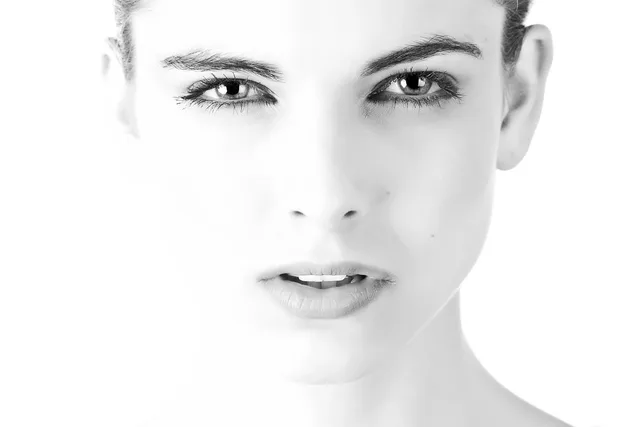
The images that look least produced are usually the most produced. That is the whole subject of this page, and once you can see it working, a great deal of what passes across a feed stops being about faces and starts being about production.
On a site about celebrity beauty and cosmetic transformations, these images matter for a specific reason. Timelines compare faces across years, and a no-makeup photograph is often treated as the honest baseline in that comparison. It is not a neutral record.
It is a styled picture, made with lighting, framing, makeup and often camera processing. So when a timeline seems to show a dramatic change, part of that change can come from the photograph itself. This page explains how to read that style, so the timelines here stay about evidence rather than about a single flattering or unflattering frame.
It is also why this site treats medical claims about named people as off limits. A photograph can show a difference in presentation. It cannot show a procedure.
What to take away
- A photograph that reads as unstyled is making a claim about itself. The claim is part of the styling.
- The cues that signal "candid" are cheap to fake and are faked routinely: soft daylight, a slightly loose crop, a bit of grain, an off-guard expression.
- Buying decisions made from these images go wrong in a predictable way, and the fix is boring: sample in your own light, buy small, keep the receipt.
The signals that say "no effort"
Nothing on this list is a trick or a scandal. They are craft choices, and they are chosen precisely because of what they say to a viewer.
Cues That Read as Candid
- Soft directional daylight or lamp
- Loose or slightly crooked crop
- Visible grain or muted color pass
- Expression caught mid-movement
- Ordinary surroundings like kitchen or car
- Caption that says no filter
- Soft daylight.Overcast or window light flattens texture and softens small shadows, so skin reads as even before anything is retouched.
- A slightly loose crop.More shoulders and background, less face filling the frame — the framing of a snapshot rather than of a portrait sitting.
- A little grain or softness.Grain suggests an unretouched camera file rather than a studio setup, whether or not the grain was there to begin with.
- An off-guard expression.Half a smile, eyes not quite on the lens: a pose that says nobody was directing.
- Flat, low-contrast color.Muted contrast and a warm, washed palette read as daylight rather than as a grade.
- Shallow focus against a plain background.A blurred ordinary room or street keeps attention on the face while looking unarranged.
What is actually on the face
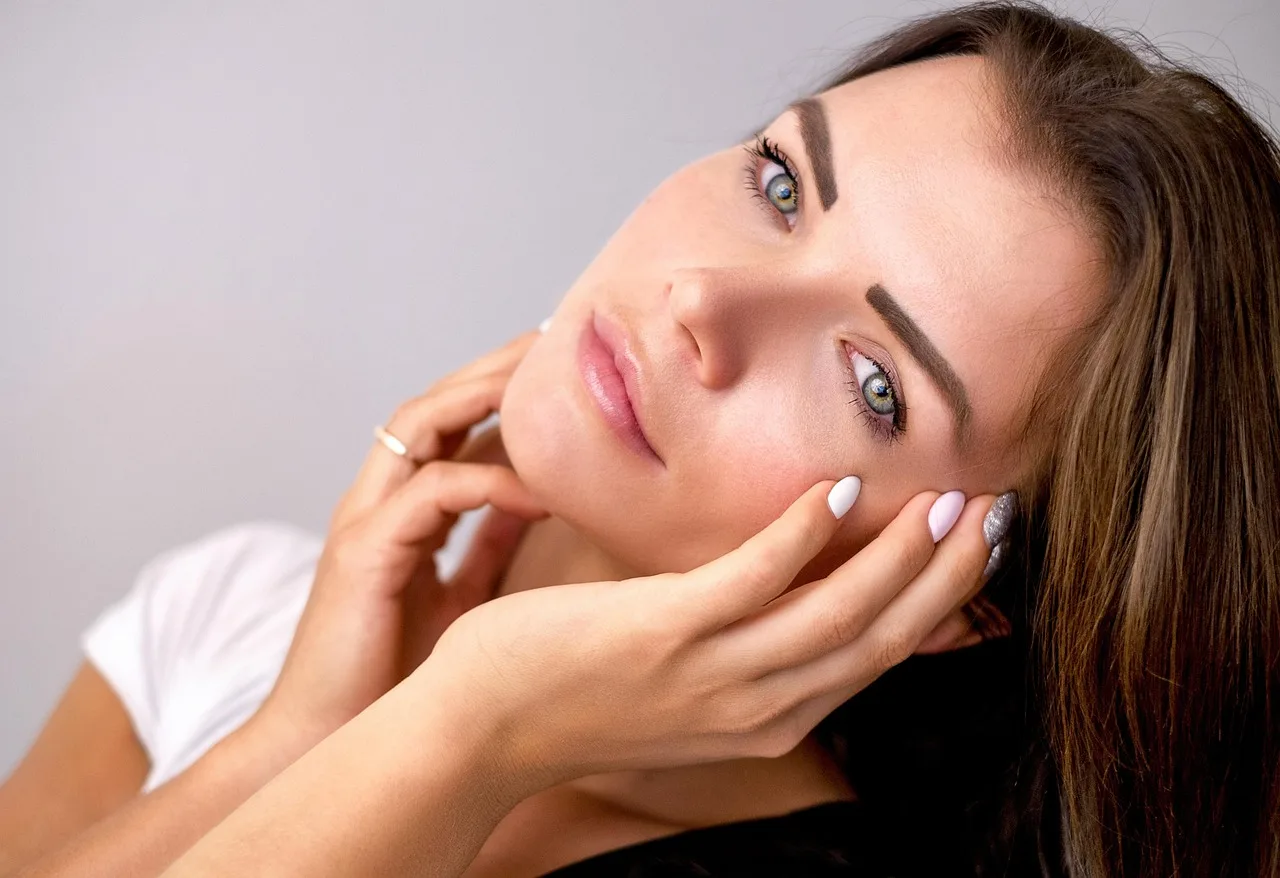
The point of the technique is that it is hard to list from a photograph, but the parts have names. Skin prep comes first, then a sheer base — a tinted moisturizer or a light-coverage foundation — with concealer pressed only where it is needed rather than swept across the face. Brows are set with a tinted gel instead of drawn, color goes on in cream form (a cream blush, a tinted balm or a sheer gloss), and mascara, if any, stays on the roots of the upper lashes. It is a professional style with its own name — no-makeup makeup — its own products and a set sequence, and beauty campaigns and magazine covers are built on it.
It takes time and is often more work than an obviously made-up face, not less, because every edge has to disappear.
That is worth knowing for one reason only: if you have looked at these images and concluded that your own bare face falls short, you have been comparing yourself to a piece of work.
The camera's own contribution
Before any human edits anything, the device may already have intervened. Phone cameras and social applications apply smoothing, brightening and shaping at capture, frequently by default and frequently without saying so anywhere the user will look.
So an image can arrive already retouched, honestly captioned by someone who did not do the retouching. Both things can be true. This is one reason a caption is a poor guide and a source of a great deal of unnecessary misery.
For the wider account of everything a frame passes through on its way to your screen — the makeup, the lighting, the grade — see celebrity makeup.
Buying from a picture
This is where the abstract problem becomes a practical one, because most of these images sit next to something for sale.
Buying Beauty From a Picture
- Screen shade is not your shade
- Take tester to a window
- Test on the area you will wear it
- Buy the smallest size first
- Read returns policy before paying
- Give it a full day to settle
- A shade seen on a screen is not a shade.Your display, my display and the photographer's grade all disagree. Nothing you buy from an image is color-matched to your face.
- Retail lighting is designed.It is designed to sell, not to inform. Take the tester to a window, or to the door, and look at it there.
- Test on the area you will wear it on, not on the back of a hand, which is a different color from a face on almost everybody.
- Buy the smallest size the first time.A full-size purchase of an untested product is a bet on a photograph.
- Read the returns policy before you pay, especially online, and especially for color. Policies on opened cosmetics vary and it is much better to know beforehand.
- Know which regime the thing you are buying sits in.In the United States that regime is set by the Federal Food, Drug, and Cosmetic Act, with the rules for cosmetics updated by the Modernization of Cosmetics Regulation Act. The Food and Drug Administration's page on cosmetic products and their ingredients explains what the category covers, which is not the same as the category having been tested for you.
- Give it a day.Products settle, oxidize and move on skin. The verdict at the counter and the verdict at six in the evening are different verdicts.
Why the natural look is not the cheap option
The category is not the budget option. A look built from several sheer layers is often more products, not fewer, and each of them is consumable. That is fine if you want it, and it is worth counting honestly before you decide you need it.
Counting honestly means counting items rather than one price. A full look can run through several sheer layers, each of them consumable and each of them replaced on its own schedule, and the only figure that means anything is the one you work out for your own shelf.
When it stops being a shopping question
If your skin is sore, reacting, changing in a way that worries you, or simply not settling, that is a matter for a pharmacist or a doctor rather than for a shopping decision. Take the actual product with you so they can see exactly what was used. No article, this one included, can look at your skin.
For general background written by clinicians rather than sellers, the American Academy of Dermatology publishes everyday skin care guidance, and it is a better starting point than a comment section.
Common questions
Is a no-makeup look really no makeup?
Sometimes yes, often no. It is a named style with its own products and techniques, so the honest answer is that you cannot tell from the picture, and it does not matter to your own decisions either way.
Does "no filter" mean the image is unedited?
It means the person did not apply one deliberately. Cameras and apps commonly smooth and brighten on their own, so the phrase describes an intention rather than a result.
Why does a product look different at home from in the shop?
Because shop lighting is engineered, and because your bathroom is probably lit from directly overhead, which is close to the least flattering arrangement available. Neither is showing you the truth. Daylight from a window is the fairest test you have at hand.
Do you write about which public figures have had cosmetic procedures?
No. It is a medical claim about a real person, it cannot be supported by a photograph, and it is theirs to disclose or to keep private.
In this guide
- No-makeup looks: Alicia Keys and Pamela Anderson's public timelinesDated public timelines of Alicia Keys (2016) and Pamela Anderson (2023 and 2024) going without makeup, and what a real cosmetic timeline would need that these do not supply.