Guides
Celebrity makeup photos: the seven stages behind one frame
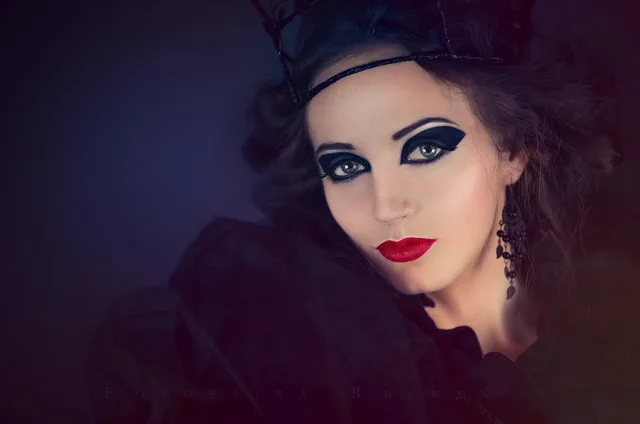
Celebrity makeup photos pass through seven production stages, from lighting to retouching. Each stage is paid work, and your mirror has none of it.
A published celebrity makeup photograph is a manufactured object, which is why it never matches what your mirror shows you. That is not a complaint about vanity and not an accusation against anyone in the picture. It is a description of how the images are made, and it is the most useful thing to know before you hold your own face up against one.
What to take away
- A published frame passes through the seven production stages in the table below. Makeup is one input among them.
- Most of the gap between that frame and your bathroom mirror was set by equipment, labor and post-production, not by skin.
- Color grade, retouching and selection all happen after the subject has left the room.
- This site does not guess whether a named person has had cosmetic work. A photograph cannot support that claim in either direction.
- Advertising claims about appearance sit under FTC standards; cosmetic products sit under FDA rules. Both are free to read.
The seven stages, in order
The order shifts between jobs, but the stages are consistent.
| Stage | Who works there | What gets decided |
|---|---|---|
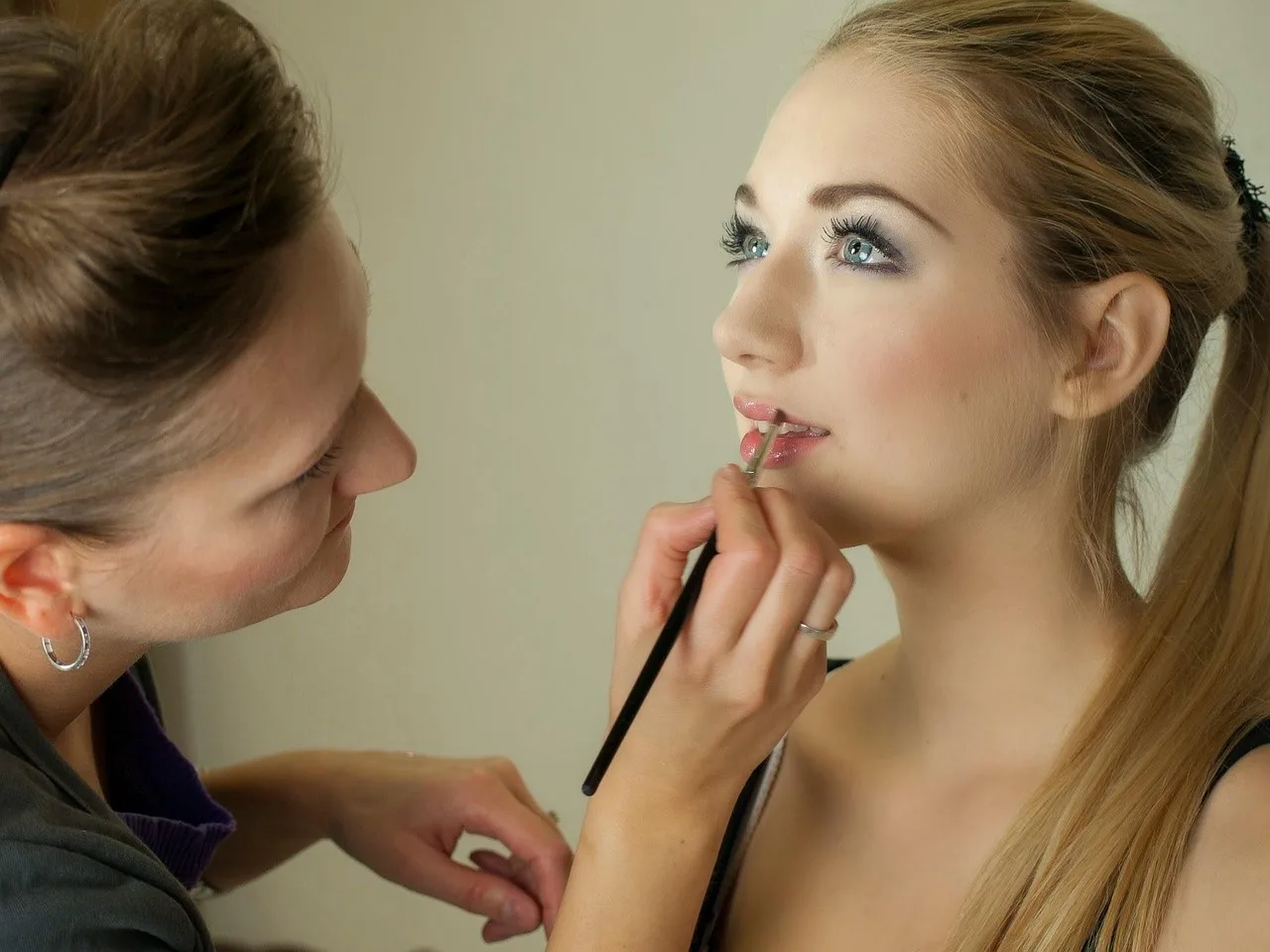
| Preparation | Skin, hair, wardrobe, often separate people on separate briefs | Base, color, texture, what the clothes do to the neckline |
| Lighting | Lighting director or photographer | Where every shadow falls, and how hard its edge is |
| Lens and distance | Photographer | Apparent face width, nose length, jaw set |
| Capture | Photographer, digital tech | Hundreds of frames, of which one survives |
| Color grade | Colorist or retoucher | Warmth, contrast, saturation, applied to the whole frame |
| Retouching | Retoucher | Texture, stray hairs, color evenness, small corrections |
| Selection | Photo editor | Which single frame is published |
Lighting and lens choices are made around the makeup, and color grade, retouching and selection happen after the subject goes home, usually in desktop software such as Adobe Photoshop or Capture One.
Lighting is the stage people underrate. A large light modifier, such as a softbox or an umbrella, moved half a meter, redraws every shadow on a face. It is the cheapest way to change how a jaw or a cheekbone reads, and it leaves no trace in the finished picture.
Why the mirror comparison is a budget comparison
Every stage in the table is paid work, and your mirror has none of it. Rates differ by market, by year and by how famous the subject is, so the shape of the bill is more useful than any single figure: put named variables on it.
Let H be the hours the glam team spends on one face. Let T be the hourly rate each of them charges. Let P be the photographer's day rate, E the editor's, R the retoucher's. Let F be the frames captured and S the frames published, usually one.
The labor cost of the published frame is roughly:
(H x T) + P + E + R
Public wage data gives the variables a starting value. The Bureau of Labor Statistics reports that the median hourly wage for photographers was $21.47 in May 2025, and the median hourly wage for hairdressers, hairstylists, and cosmetologists was $17.21 in May 2025. These are national medians across whole occupations, not celebrity bookings, so they describe the typical worker rather than the glam team on a magazine cover.
To use the formula, ask a local makeup artist and a local photographer for their rates and plug them in: the total for one finished frame is the honest measure of what you are comparing yourself with. That figure describes one image. Your morning has one person in it, in whatever light the room happens to have, with no second attempt and no editor.
The comparison people make between those two things feels like a comparison of faces. It is a comparison of budgets and production time. Nobody wins it, including the person in the photograph, who does not look like that in the corridor outside.
What a photograph of a face cannot tell you
It cannot tell you what someone's skin is like, because skin texture is the first thing light and retouching erase.
What a Face Photo Cannot Tell You
- Skin textureerased by light and retouching
- Bone shapemoves with lighting and lens
- Colorpushed warmer or cooler afterwards
- Health or medical historynot visible
- Cosmetic proceduresno evidence in the image
It cannot tell you the shape of a bone, because that shape moves with the lighting and the lens. Move one lamp and a cheekbone appears or disappears.
It cannot tell you a color, because the whole frame was pushed warmer or cooler afterwards, and because your screen and mine disagree.
It cannot tell you anything about a person's health or medical history. Every difference between two photographs has a long list of innocent explanations before it has an interesting one.
Four reasons this site will not publish before-and-after comparisons
There is a large market in taking pictures of a named person from different years, putting them side by side, and inviting an audience to conclude something about their body. We do not do that here.
- The evidence cannot carry the claim.Two photographs taken years apart, in different light, on different cameras, at different weights, cannot establish a medical fact about an identifiable person.
- It is not the subject's disclosure to make for them.Whether to discuss a medical or cosmetic decision belongs to the person who made it.
- It is permanent.A claim like that attaches to a name and follows it. No correction ever travels as far as the original.
- It teaches the reader a habit.The same inspection gets run on coworkers, relatives and friends, which is where the damage leaves the internet and lands on someone.
So the pages here are about the pictures, the market that produces them, and your own decisions. They name nobody.
Advertising rules that do apply
Advertising is regulated, and the rules are public.
In the United States, the Federal Trade Commission publishes guidance on health-related advertising claims, the Health Products Compliance Guidance. It describes the evidence an advertiser is expected to hold before publishing a result claim: advertising must be truthful and not misleading, and advertisers must have adequate substantiation before they run an ad. Endorsements fall under the FTC's Endorsement Guides, 16 CFR Part 255, which include a section on disclosure of material connections.
Cosmetic products sit under a different regime. The FDA sets out how cosmetics are regulated without being approved, a narrower arrangement than most packaging suggests. The Modernization of Cosmetics Regulation Act of 2022 (MoCRA) is, in the FDA's words, the most significant expansion of its authority to regulate cosmetics since the Federal Food, Drug, and Cosmetic Act was passed in 1938.
State medical boards, not articles, are the place to verify whether a named practitioner holds a license. California, Florida, Georgia, Illinois and Nevada each publish their own lookup, run by the Medical Board of California, the Florida Board of Medicine, the Georgia Composite Medical Board, the Illinois Department of Financial and Professional Regulation and the Nevada State Board of Medical Examiners. Advertising disputes belong with the FTC or a qualified attorney in your jurisdiction, not with a magazine.
Getting something useful out of a reference image
References are genuinely helpful. They are helpful for a narrower job than people assume.
- Use them to name a color or a shape you like. Those survive the trip out of the photograph.
- Do not use them to set a finish. Finish is mostly light, and you cannot buy the light.
- Look for images shot in conditions like your owna phone, a room, daylight from a window. Less flattering is the same thing as more informative.
- Assume campaign photography has been retouched. Assume the same of a social post unless you have a reason not to.
- Phones and apps smooth and brighten at the moment of capture, often by default: many phone cameras ship with a beauty or portrait mode, and apps such as Facetune exist to reshape a face after the fact. An image can be edited before it has been taken.
Common questions
Why do these looks never work the same way at home?
Because a large part of what you are copying is not on the face. It is the light, the lens and the pass that happened afterwards.
Is retouching dishonest?
It is ordinary commercial practice and usually invisible by design. The problem is not that it happens. The problem is comparing an unedited person to an edited one and treating the gap as a personal failing.
Can you tell from photographs whether someone has had a procedure?
No, and neither can anyone else, however confident they sound. That is why this site does not run those comparisons.
What is worth doing instead?
Judge products and routines on how they feel and behave on you. Take medical questions to a licensed physician or surgeon in your jurisdiction, who can actually examine you.
In this guide
- Five celebrity makeup looks, and why before-and-after photos can misleadFive named celebrity makeup looks (bronze monochrome, graphic liner, gloss skin, smoked brown and the blurred nude), what each puts on the face, and how makeup, light and lens can make a before-and-after pair look like a change that never happened.