Industry
Part of Celebrity makeup photos: the seven stages behind one frame
Five celebrity makeup looks, and why before-and-after photos can mislead
Five named celebrity makeup looks (bronze monochrome, graphic liner, gloss skin, smoked brown and the blurred nude), what each puts on the face, and how makeup, light and lens can make a before-and-after pair look like a change that never happened.
Celebrity makeup styles beyond the obvious are the ones working artists return to when a client wants to be recognized as herself rather than as the trend of the month. The obvious looks get copied to death: the red lip, the smoky eye, the wet-look skin.
The five below are named looks that show up in red-carpet photographs, and each one is tied to a celebrity reference. The second half of the article covers the point that matters most for this site: makeup alone can make two photographs look like different faces.
What to take away
- Five named looks carry much of the red-carpet workbronze monochrome, graphic liner, gloss skin, smoked brown and the blurred nude.
- Each one is a small set of decisions about placement, finish and color, not a product list.
- A look is built for the light it will be photographed in, so it rarely transfers to a kitchen unchanged.
- Makeup, light and lens can change how a face reads in a photo, so a before-and-after pair taken with different makeup is not evidence of a treatment.
- Date and record every frame before comparing it with another.
Five celebrity looks, and what each one is
Bronze monochrome. One warm brown family, used on lids, cheeks and lips, with nothing cool anywhere. Jennifer Lopez is the celebrity reference for this look in this guide.
It suits medium to deep skin and any event shot under warm light. The failure mode is a muddy face, which happens when the bronzer is darker than the neck.
Graphic liner. A drawn line with a hard edge, usually winged, sometimes floating above the crease. Audrey Hepburn's 1960s wing is the old reference.
It suits a bare lid and a strong brow. It is the most photographed look on this list because a hard edge survives a long lens.
Gloss skin. Skin left dewy on purpose, with powder only where the light will hit. Rihanna's red-carpet gloss skin is the reference here. It suits dry and normal skin and reads badly under flash, which is why it appears most in daylight events and in editorial work.
Smoked brown. A soft brown shadow built outward from the lash line, with no black. Kendall Jenner's brown smoky eye is the reference here. It suits hooded and mature lids because it adds depth without drawing attention to the crease.
The blurred nude. A nude lip and a nude eye, both applied and then softened at the edges so nothing looks drawn. Meghan Markle's 2018 wedding makeup is the reference here, a soft lip and eye close to nude. It is the hardest of the five, because a nude that is half a shade off reads as illness on camera.
What the camera does to all five looks
The look in an event photograph is not the look in the room. It is the look plus a lighting plan, a lens, a color grade and a retouching pass, and the makeup was chosen to work with the other four.
Focal length changes facial proportion before any makeup is considered. A short lens close in enlarges whatever is nearest the camera; a long lens further back flattens and narrows the same face. That geometry is described in perspective distortion.
Position, hardness and color temperature decide where shadows fall, which is exactly what contouring imitates.
Why makeup can read as a transformation
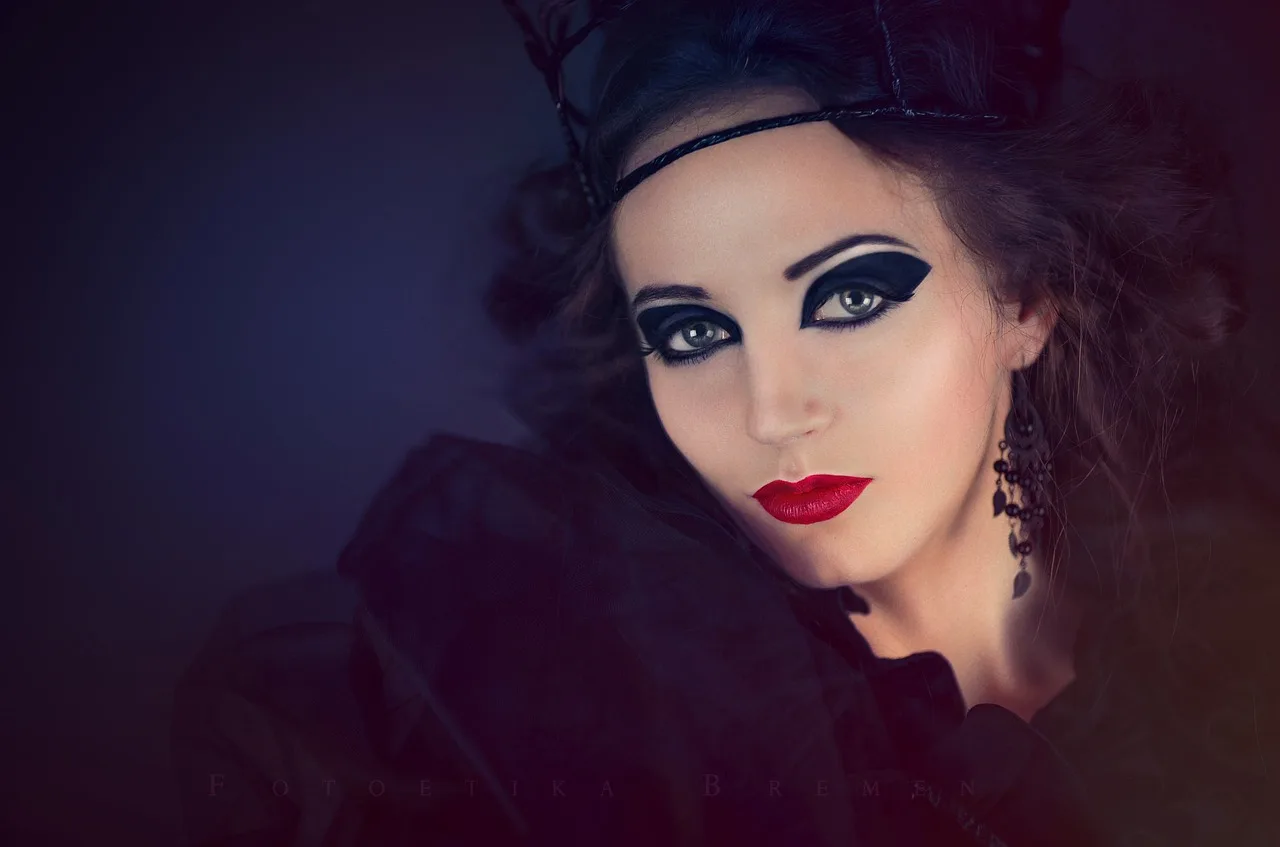
Bronze monochrome and graphic liner change the edges of a face. In a before-and-after pair, that change can look like a new jawline, a different brow shape, or a younger or older face. None of it needs a procedure, and none of it shows one.
This is why a pair of photographs cannot establish a cosmetic timeline. Each frame carries its own makeup, light, lens and grade. Without those details recorded, the pair compares photographic conditions as much as faces.
Worked example: reading a bronze monochrome frame
Take one published frame and pull it apart in this order.
- Find the light. A single hard shadow under the jaw means one strong source, usually from the front. Bronze reads deeper under that light than it will in a room.
- Find the lens. A long face with compressed features suggests a long lens at distance. The cheekbone you are copying is partly that compression.
- Find the grade. Compare the whites of the eye to the background white. A warm cast across both means the whole image was pushed, not the makeup.
- Find the retouch. Look for skin that is even in tone but still shows pores. Even tone with no texture anywhere is a pass, not a product.
- Then decide what is left. Usually it is a color and a placement. That part you can copy.
Build a dated record for each frame
Before any two frames go side by side, record the following for each one:
- The source and the date it was published, plus the event date if the photo was taken at one.
- The makeup artist credit, as published, and whether the credit is confirmed by the artist or the publication.
- The lens and lighting cues you can see, such as hard shadows or a long-lens flattening.
- Whether retouching is stated or only suspected, and which parts of the frame it appears to touch.
- The order of the frames, with the minutes between them where that is known.
For example, two frames from one event taken forty minutes apart can differ in light alone. A record like this shows that difference before anyone draws a conclusion from it.
What you can take, and what you cannot
You can take a color you like and a placement you like. You cannot take a finish, because finish is mostly light.
Look for reference images shot in conditions like your own: a phone, a room, daylight through a window. An uncontrolled photograph of a product on an ordinary face in ordinary light tells you more about how it behaves than a campaign image does.
If you are shopping from pictures
- Swatch in daylight near a window, not under a shop's own lighting.
- Treat a campaign image as retouched, and treat an influencer image the same way unless there is a reason not to.
- Read the return policy before buying a shade from a screen.
- Buy the smallest size the first time.
The production chain behind a published frame is set out in the guide to celebrity makeup photos. The same argument applied to claims about skin sits in the piece on before and after photo advertising rules.
The comparison problem
Beauty marketing sets a manufactured image beside your face and lets you do the arithmetic. That image is a team's output: one person's whole job that day was one face, with time, professional light, and a retoucher after.
Your national advertising regulator publishes the standards that apply to retouched imagery where you live, plus its complaints route. In the United States, the Federal Trade Commission answers common cases in its questions and answers on endorsements, including when a paid relationship behind an image must be stated.
Common questions
Why does a named look never come out the same at home?
Because most of what you are copying is not on the face. It is the light and the lens, and both change the moment you leave the carpet.
Is the blurred nude really no makeup?
No. It is a style with its own name, its own products and its own techniques. The full version is in no-makeup looks.
Do you write about which public figures have had cosmetic procedures?
No. That is a medical claim about a real person, unsupported by the photograph it would rest on, and it is theirs to disclose or keep private. Why a pair of images cannot carry that weight is worked through in the before and after photo checklist.