Rules
Skincare routines ideas sorted by effort and payoff
Skincare routines ideas sorted by effort and payoff, from a two-step wash and moisturise to tretinoin, with what each costs and who it suits.
This page lists skincare routine ideas sorted by effort and payoff: what each one asks of you, what it gives back, and what it costs at a US drugstore.
It does not tell you what to buy for your skin. The products named below are price examples, not recommendations for your face. That question belongs to a pharmacist, a doctor or a dermatologist, who can see your face and I cannot.
What to take away
- The cheapest routines on this list are the ones most people should start with: a gentle cleanser, a moisturizer and sunscreen.
- A two step routine built on CeraVe Hydrating Facial Cleanser (about $15 for 12 fl oz) and CeraVe Moisturizing Cream (about $18 for 19 oz) costs about $35 upfront.
- Effort and payoff are not proportional. Sunscreen costs two minutes a day and does more than any serum.
- Actives such as tretinoin and adapalene need a prescriber or a pharmacist, and a fair trial measured in months.
- The photograph that started your search was manufactured. No routine closes that gap.
- Judge a routine on comfort, cost over a year and whether you still do it in week twelve.
The routines, sorted by effort
Two steps: cleanse with CeraVe or Cetaphil and moisturize
Wash with CeraVe Hydrating Facial Cleanser, a non-foaming formula that runs about $15 for 12 fl oz, then apply CeraVe Moisturizing Cream, about $18 for a 19 oz tub.
Cetaphil Gentle Skin Cleanser, about $14 for 16 fl oz, and Vanicream Moisturizing Cream, about $14 for 16 oz, work the same way.
That is the whole routine. It suits anyone whose skin is comfortable and who wants the least possible intervention, and it costs the least of anything here.
Effort: about two minutes, morning and night. Payoff: skin that is not stripped, which is the state most other products assume.
Three steps: add sunscreen
Sunscreen in the morning, every day, including overcast days and days spent indoors near a window.
Options with a published SPF and a US price include EltaMD UV Clear SPF 46, about $43 for 1.7 oz, and La Roche-Posay Anthelios Melt-in Milk SPF 60, about $37 for 3 oz.
Two cheaper options: Neutrogena Ultra Sheer Dry-Touch SPF 55, about $12, and Black Girl Sunscreen Kids SPF 50, about $10 for 3 oz.
This is the single highest-payoff item on the list and the one most often skipped because it feels optional.
Effort: two minutes. Payoff: it is the only step here with a large body of evidence behind it for photoaging.
Four steps: add one active, adapalene or tretinoin
One active, not three. Adapalene is available over the counter in the United States as Differin Gel 0.1%, about $15 for 15 g, with store-brand versions near $12.
Tretinoin needs a prescription, and generic tubes typically run $30 to $60 with insurance, more without.
Both are vitamin A derivatives, and both need a slow start, a pea-sized amount, and buffering with moisturizer if your skin stings.
Effort: one extra step at night, plus a purge period that can run several weeks. Payoff: the most studied of the cosmetic actives, and the one with the longest adjustment.
Five steps: add an antioxidant serum (vitamin C)
Vitamin C serums go in the morning under sunscreen. Timeless 20% Vitamin C + E + Ferulic is about $26 for 1 oz, and La Roche-Posay Pure Vitamin C10 is about $45. SkinCeuticals C E Ferulic runs about $182 for the same size.
Formulation matters more than percentage, and a serum that has oxidized to orange-brown has stopped being useful.
Effort: one step, one purchase decision. Payoff: modest and cumulative, and easy to drop if it irritates.
Six steps: add a hydrating layer (hyaluronic acid or glycerin)
Hyaluronic acid or glycerin under moisturizer, applied to damp skin. The Ordinary Hyaluronic Acid 2% + B5 is about $10 for 1 oz, and Neutrogena Hydro Boost Water Gel is about $20.
That is the cheapest way to make a routine feel better without changing what it does.
Effort: seconds. Payoff: comfort, mostly. It suits dry climates and heated rooms.
Seven or more: the full sequence
Toner, essence, serum, ampoule:
- eye cream
- moisturizer
- oil
Nothing here is wrong. The problem is that a routine this long is abandoned more often than it is finished, and an abandoned routine has no effect regardless of what is in it.
Effort: twenty minutes a day and a shelf of bottles. Payoff: largely the same as the four-step version, plus a larger annual bill.
What each one costs over a year
Prices below are typical US retail as of 2026 and vary by brand and pharmacy, so substitute your own figures: unit price times purchases per year. The arithmetic is the same either way.
Items to buy
- Cleanse and moisturize
- 2 items: CeraVe Hydrating Facial Cleanser, about $15 for 12 fl oz; CeraVe Moisturizing Cream, about $18 for 19 oz
- Add sunscreen
- 3 items: the two above plus EltaMD UV Clear SPF 46, about $43 for 1.7 oz
- Add one active
- 4 items: the three above plus Differin Gel 0.1%, about $15 for 15 g, or prescription tretinoin, about $30 to $60 a tube
- Add an antioxidant serum
- 5 items: the four above plus Timeless 20% Vitamin C + E + Ferulic, about $26 for 1 oz
- Add a hydrating layer
- 6 items: the five above plus The Ordinary Hyaluronic Acid 2% + B5, about $10 for 1 oz
- Full sequence
- 7 or more items: toner, essence, serum, ampoule, eye cream, moisturizer, oil
Annual cost
- Cleanse and moisturize
- about $60 to $110
- Add sunscreen
- about $200 to $350
- Add one active
- about $230 to $450
- Add an antioxidant serum
- about $290 to $560
- Add a hydrating layer
- about $300 to $600
- Full sequence
- about $600 to $1,500
Sunscreen and actives drive the total: a prescription tube can cost more than every other item combined.
A routine you cannot afford indefinitely is one you are testing rather than keeping. That matters more than which brand you chose.
What a routine can honestly be judged on
Comfort first. Does your skin feel tight, sore, itchy or fine? That signal is more reliable than anything printed on a bottle.
Then whether you keep doing it. Fewer steps you complete beats an elaborate routine you abandon in three weeks.
Then whether you know what is in it. Not to evaluate the chemistry, but so that if something reacts, you can tell a professional exactly what you used.
How to test one change honestly
Change one thing at a time. Starting three products together means that whatever happens, you will not know which caused it, and if something reacts, you will not know what to stop.
Ask a pharmacist how long a fair trial is for what you are using. Do not take that timeline from the packaging, which is written to sell.
If you photograph, control it. Use the same window, time of day, distance, and angle. Turn beauty modes off. Keep the same makeup, or none.
Overhead bathroom lighting manufactures shadow and texture, so it is the worst choice available.
Keep the whole series, ten frames rather than two, because comparing your worst day to your best day is the format this site exists to argue against.
Write down the date and what changed. Memory reconstructs to match what you hope for.
Set a stop rule in advance: a period with no change, a reaction, a cost you cannot carry.
The target is manufactured
The skin in the photograph that prompted the search has run through a production line. Lighting was chosen to remove texture, usually a large diffused source such as a softbox placed close to the face.
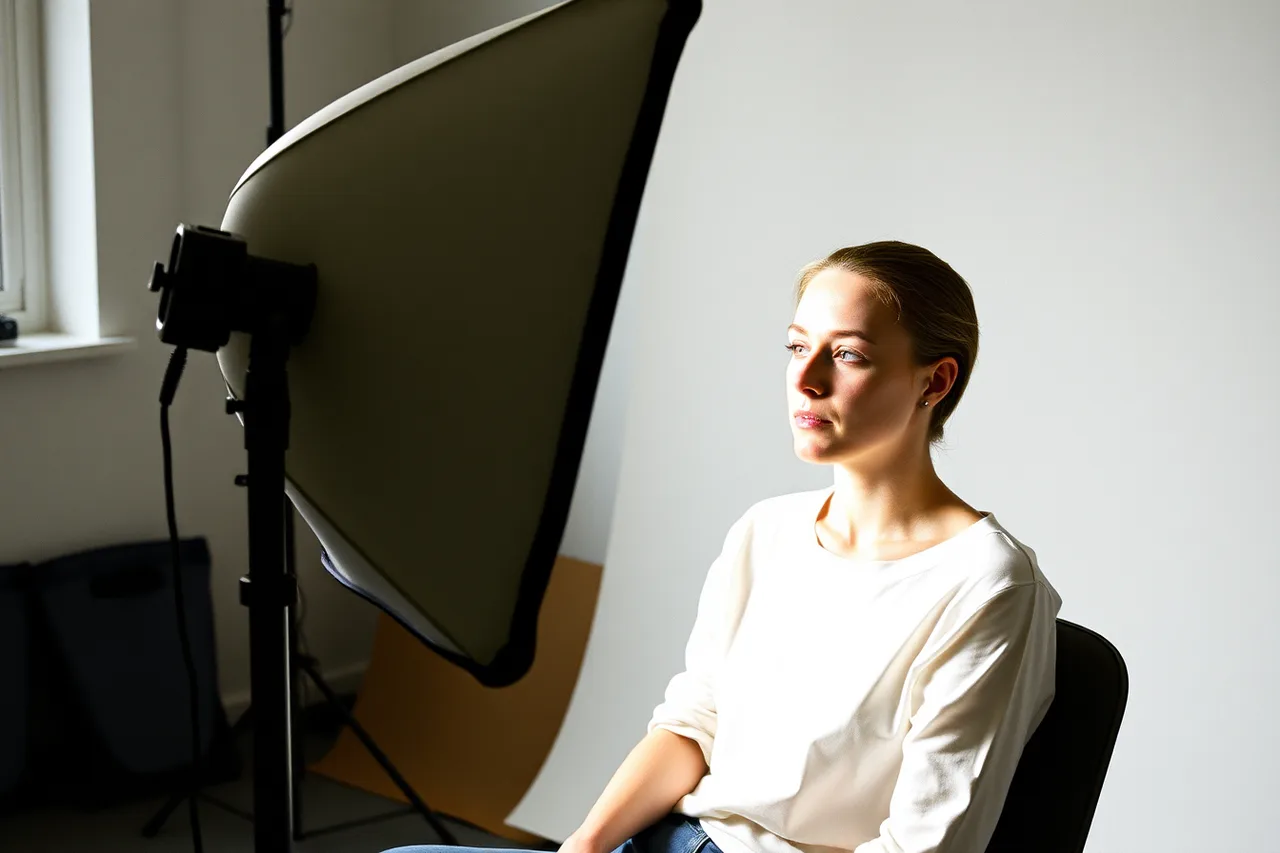
A lens and distance change facial proportion, and a color grade covers the whole image, followed by a retouching pass. Increasingly the camera or app smooths at capture, before anyone edits.
Five more things shaped each portrait, chosen from dozens of frames:
- makeup
- hour of day
- season
- sleep
- whether the person had been outside
- the fact that one frame was chosen from dozens
The result is a reference image no skin matches, including the skin of the person in it.
When to stop and ask someone qualified
If your skin reacts badly, stop, and take the product with you to a pharmacist or doctor so they see exactly what it was.
Anything painful, spreading or not settling is a question for a professional, not a comment section. That holds no matter how minor it seems or what the product cost.
Persistent skin conditions are medical matters with medical routes, and the National Library of Medicine's overview of common skin conditions is background rather than an answer.
Common questions
How long is a fair trial for something new?
It depends on the active, and a pharmacist can tell you for the specific product. What is worth refusing is the timeline printed on the box, which was written to sell rather than to inform. Tretinoin in particular can take months before the visible change arrives.
Can I start two routines at once if I am careful?
You can, and then you will not know which one did anything. If something reacts you will also not know what to stop. Careful does not help here; only sequence does.
My photographs show no change. Does that mean nothing happened?
It means your photographs did not record one, which is a different statement. If the conditions were not fixed, the series is measuring the room, and it can hide a real change as easily as invent one.
Is there a version of this a page can answer for me?
The method, yes, and the effort and cost of each routine above. The product, no. Nobody writing for a general audience has seen your skin, and a recommendation made without that is a guess with a byline attached.
Related: skincare routines, and no-makeup looks on why the least-produced-looking images are frequently the most produced. The photographic half of the problem is set out in before and after timelines, and the commentary industry built on top of it in beauty expert analysis.