Reviews
Hair transplant clinic signals: twenty situations, what to ask, and the timeline to expect
Twenty hair transplant clinic situations, each with a next move: what to ask, what to get in writing and when to hold off. Includes FUE and FUT, the usual growth timeline, how quotes are structured and who licenses the surgeon.
Hair transplants examples work best as situations, not photographs. A picture cannot tell you what happened to anybody, and a gallery explains nothing about the process you are about to enter.
Twenty ordinary situations come up on the way to a decision. Each one tells you something about how a place works, and each one has a next move. Some are neutral, some deserve a follow-up question, and a few are worth leaving over. None of them is about anyone's appearance.
What to take away
- Each example is a signal about process, not about outcome. Process is the part you can actually observe before committing.
- A single flag is a question, not a verdict. Two or three together describe a pattern.
- The next move is nearly always the same shapeask plainly, get the answer on paper, and watch how readily it arrives.
- Anything about whether a procedure is right for you belongs to a registered practitioner who has examined you, and nothing here substitutes for that.
Hair transplant basics behind the signals
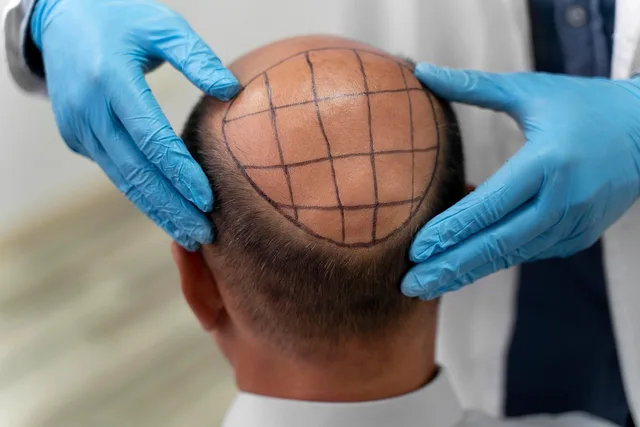
Two techniques dominate. In follicular unit extraction (FUE), the surgeon removes individual follicular units from the donor area one at a time. In follicular unit transplantation (FUT), also called the strip method, a thin strip of scalp is removed and divided into units under magnification. Ask which technique is proposed for you and why. For how hair photographs are produced and styled, see celebrity hair.
The result arrives slowly. As typical ranges that vary by person, transplanted hairs often shed in the first weeks. New growth usually starts around three to four months, and the visible result builds over the following months. The final result is usually judged at 12 to 18 months, which is the period the International Society of Hair Restoration Surgery cites.
Quotes are built from the number of grafts, the technique and the clinic, and some are priced per graft while others are priced per session. Ask which applies, what the graft count assumes and what is excluded. This article gives no prices, because they vary widely between clinics and countries.
Licensing is a state matter in the United States. The surgeon is licensed by a state medical board, such as the Medical Board of California, the Texas Medical Board or the Florida Board of Medicine. The American Board of Hair Restoration Surgery is a separate certifying body, not a licensing authority.
In the advertising
Advertising signals set how much scrutiny to bring to the first contact. For health-related claims, the Federal Trade Commission's health products compliance guidance describes the substantiation an advertiser is expected to hold: competent and reliable scientific evidence.
Advertising red flags
- Gallery has no captions
- Celebrity hair used as reference
- Prices before examination
- Award badge, unclear criteria
- Offer expires this week
1. The gallery has no captions. You cannot tell what was done, when, by whom, or how the pair was chosen. Read it as advertising, which it is, the way you would read before and after timelines. Your move: ask for the dates, the practitioner and the selection method behind each pair.
2. A famous person's hair is used as a reference. That is a photograph, carrying lighting, styling and editing along with the hair, and it says nothing about anyone's medical history. Your move: treat it as a mood, and ask what applies to your own hair.
3. Prices are advertised before any examination. A price list is a marketing document. It is not a quote for you. Your move: ask for a written, itemized quote after an examination, including what a quote leaves out.
4. An award badge sits on the homepage. Ask what the entry criteria were. Some schemes assess, some invoice. Your move: treat the badge as decoration until you have the criteria, and weigh what names don't prove.
5. The offer expires this week. A deadline attached to a permanent decision is a sales instrument, and it is aimed at the moment you are least able to weigh it. Your move: ask for the offer in writing and let it lapse if you need the time.
In the first contact
The first exchange sets the pattern. Before any consultation is booked, establish who would treat you, who answers medical questions, and what any money secures.
First contact checks
- Get the treating clinician's name
- Know if messenger is non-clinical
- Photo-based quote is a guess
- Deposit terms in writing
- Reassurance is not an answer
6. You cannot get the name of the person who would treat you. Registration attaches to individuals, so without a name you cannot check anything. Your move: hold off on booking until you have a name.
7. The person messaging you is not clinical. Normal, and fine, as long as you know it. Your move: ask who you will speak to about anything medical.
8. You are quoted from photographs you sent. An estimate from images is a guess, and everyone involved knows it. Your camera has already made decisions about proportion, color and texture, and nobody at either end can rule out deliberate manipulation. Your move: treat the figure as a placeholder until you have been examined.
9. A deposit is requested before the consultation. Ask what it secures, whether it is refundable and by when, in writing. Your move: get those three answers on paper before you pay.
10. Your questions come back as reassurance rather than answers. "You will be delighted" is not a response to "what can't you promise me". Your move: put the question once more in writing, and note whether a specific answer comes back.
In the consultation
Eight omissions turn a consultation into a sales meeting. The first is the single most important omission on the list, and each of the rest has a plain request that fixes it.
Consultation must-haves
- Physical examination performed
- Medical history taken
- Limits of treatment stated
- No same-day decision pressure
- Written information to take away
- Follow-up plan specified
- Revision policy explained
- Separate photo consent
11. Nobody examined you. Your move: ask for an examination by somebody qualified before any plan or price is discussed.
12. No history was taken. Your health and medication are part of the assessment, and a plan made without them is not a plan. Your move: ask for the history to be taken and recorded.
13. You were told everything would work. A practitioner who never says what will not work has not assessed anything. The FDA's aesthetic devices page says a procedure may not always give you the results you want. Your move: ask what cannot be promised in your case.
14. You were asked to decide today. Say in advance that you will not, and see how the room responds. Any provider worth using will be untroubled. Your move: leave without deciding, and answer from home.
15. You left with nothing on paper. Written information to take away is a basic feature of a good consultation, not a favor. Your move: ask for what was proposed in writing before you leave.
16. Follow-up was described vaguely. Ask how many appointments, over what period, with whom, and at what cost. Your move: have the answers added to the written plan.
17. Nobody mentioned revision. Ask what happens if a result needs correcting, who decides, and who pays, before any money moves. Your move: get the revision terms in writing.
18. You were asked to consent to marketing photographs on the day. That decision should be separate, optional and reversible, and it should not be raised while you are anxious. Your move: decline on the day and decide at home, knowing that US rules on before-and-after photos are a separate question.
Afterwards
Two signals follow you home. Both are cheap to settle before the procedure and hard to settle once you are worried.
19. Your records are hard to obtain. Ask early. A written record of what was done, by whom and when is what allows anyone else to help you later. Your move: request it in writing at the first visit.
20. Nobody has told you who to call at week one. Particularly if you traveled. Establish this before you book, not while you are worried. Your move: get a name and a number, in writing.
Two or three of these together describe a pattern worth acting on. The paperwork that answers most of them, from the written plan to the consent form, is listed in what a documented procedure record contains.
| Stage | Signals | The usual next move |
|---|---|---|
| Advertising | 1 to 5 | Ask for the evidence behind the claim, and let a deadline lapse |
| First contact | 6 to 10 | Get a name, a role and straight answers on paper |
| Consultation | 11 to 18 | Ask for the missing element before you leave |
| Afterwards | 19 and 20 | Settle records and a contact name before the procedure |
Common questions
Are these examples of bad clinics?
They are examples of situations. Several have innocent explanations, and asking is how you find out which. The purpose is to give you a question, not a verdict.
What if I have already paid a deposit and several of these apply?
You can still stop. A deposit is smaller than the cost of proceeding with a provider who cannot answer basic questions about their own process. The hair transplants mistakes that happen before you book explain how people reach that point.
Where do I take a question a list cannot answer?
Check with the medical board in the state where the procedure would take place. The Federation of State Medical Boards' DocInfo service can help you locate physician license and disciplinary information.